[AUTOMATION AND
DATA ENGINEERING]
The unglamorous work that
makes the rest possible
Market intelligence, forecasting, and AI all rest on the same thing: data that arrives reliably. We build that layer (warehouses, pipelines, integrations, and automation) so your analytics run on infrastructure instead of on somebody's memory and a shared folder.
[LIVE PIPELINE]
A unified data workflow with reporting and AI integrations
[OUR SOLUTIONS]
[WHY IT MATTERS]
We would rather build the foundation properly than deliver a model that quietly degrades over time
Most organizations don't decide to build fragile data operations; they accumulate them. The cost is rarely visible, but it shows up as the days between a question and its answer, the time spent reconciling two versions of the same number, the analyst whose actual job turns out to be copying and pasting, and the strategic initiative that stalls because the data underneath it was never solid enough to build on.
This is the work of replacing that accumulation with infrastructure: a warehouse that holds one version of the truth, pipelines that move data automatically and traceably, integrations that connect systems that were never designed to talk to each other, and automation that removes the manual steps entirely. Not a project that ends, but a foundation the rest of the business runs on.

[HOW WE WORK]
State-of-the-art approaches to challenging questions
Thorough process mapping and standardization
Before anything is built, we map how data moves through your organization, including the undocumented steps and workarounds people have quietly built to keep things running.

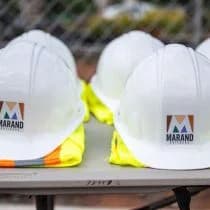
Marand Builders
AI readiness assessment · Data preparation for AI/ML workloads
[USE CASES]
Selected
Work
[APPLICATIONS]
Applications by sector

Real estate and construction
Project management, payroll, field, and expense systems unified into one operational picture.

Retail
POS, inventory, and e-commerce integrated for near-real-time performance visibility.

Insurance
Policy, claims, and CRM data connected with auditable data lineage.

Automotive
Dealer, service, and inventory systems connected across the network.

Government and development agencies
Reproducible pipelines and documented provenance for reporting and accountability.
[CROSS LINKS]
We are here to help you
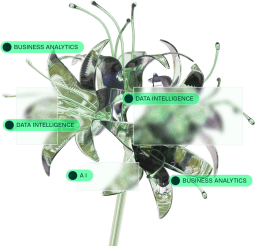 BUSINESS ANALYTICSMARKET INTELLIGENCEDATA ENGINEERINGAIMARKET RESEARCH
in the whole data cycle
Do you feel you need more market data?
Check our servicesYour data is ready and you need to deploy AI models within your organization?
Check our services
Let's

talk
Allow our team to understand
your needs and propose an
action plan
DMA Research
& Data Analytics
Edificio Kinetika, piso 8, calle El Carmen
y 17 avenida norte, Santa Tecla, El Salvador